Ferula Tenuisecta — The Plant Behind Ferulanin
Behind every effective natural supplement lies a plant with a story. For Ferulanin, that story begins in the sun-drenched mountain slopes of Central Asia, where Ferula tenuisecta has grown wild for millennia. This remarkable member of the Apiaceae family has been used in traditional medicine for generations, and modern science is now confirming what healers in the region have long understood -- that this plant holds genuine therapeutic potential, particularly for men's health.
Botanical Profile
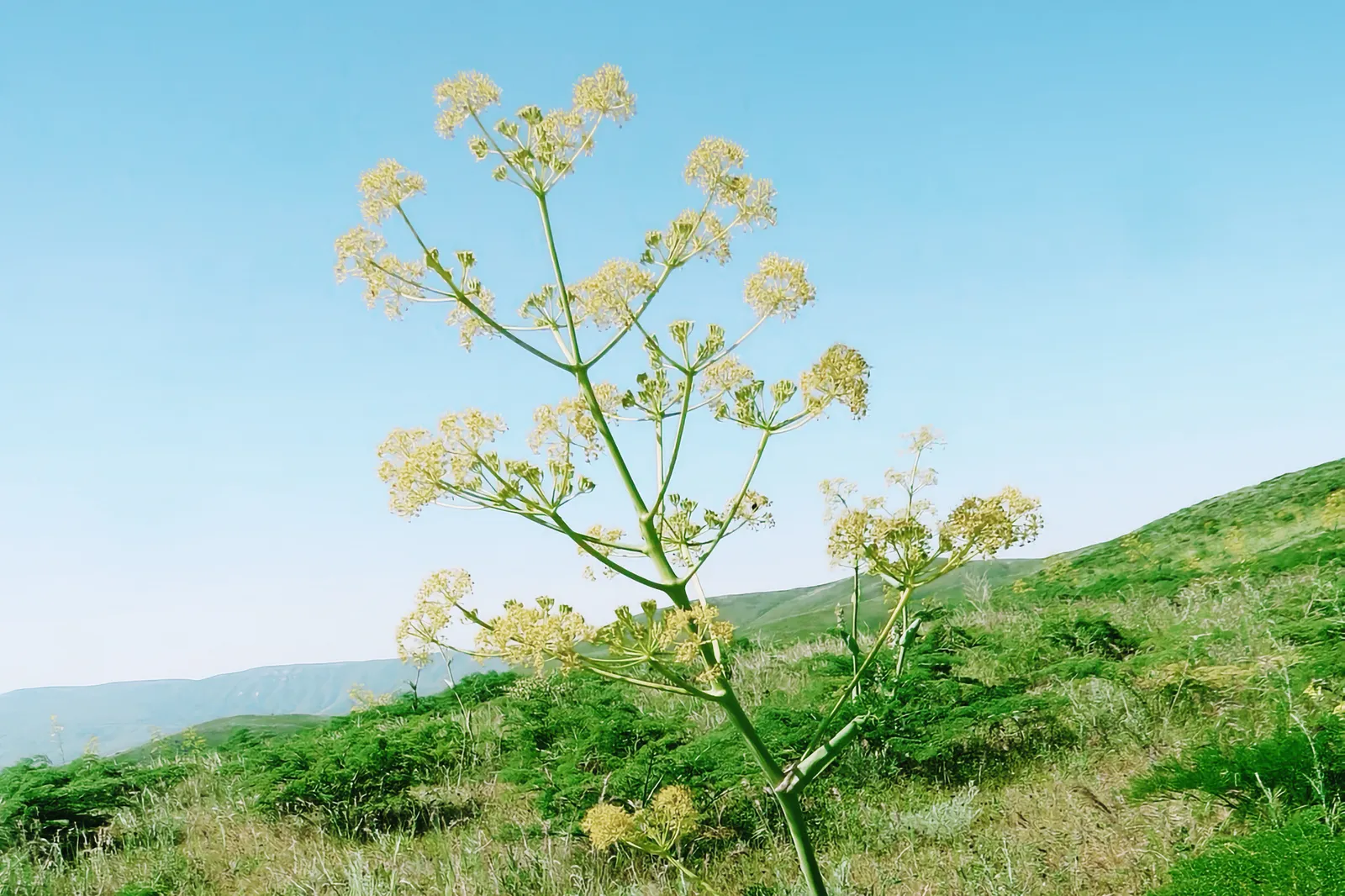
Ferula tenuisecta is a perennial herbaceous plant belonging to the genus Ferula, one of the largest and most diverse genera within the carrot family (Apiaceae). The genus comprises over 170 species distributed across Central Asia, the Mediterranean basin, and parts of North Africa. Ferula tenuisecta is distinguished by its finely dissected, feathery leaves -- the characteristic from which its species name derives (tenuisecta meaning "finely cut").
The plant typically grows to a height of 60 to 150 centimeters. It produces a thick, fleshy taproot that stores the bulk of its bioactive compounds. Above ground, the plant develops hollow stems topped with umbrella-like clusters of small yellow flowers, characteristic of the Apiaceae family. The flowering period occurs in late spring and early summer, after which the plant produces flat, winged seeds dispersed by wind.
Root System and Active Compounds
The root of Ferula tenuisecta is the most pharmacologically significant part of the plant. It accumulates a resinous gum rich in terpenoids, coumarins, and sesquiterpene esters. Among these, ferutinin -- a daucane-type sesquiterpene ester -- stands out as the primary bioactive compound with documented effects on prostate health and hormonal balance.
The concentration of ferutinin in the root varies depending on the age of the plant, growing conditions, and harvest timing. Plants harvested at optimal maturity from their native high-altitude habitats tend to yield the highest concentrations of this valuable compound.
Geographic Origin and Habitat
Ferula tenuisecta is native to the mountainous regions of Central Asia, with its primary distribution centered in Uzbekistan, particularly in the Tien Shan and Pamir-Alay mountain ranges. The plant also occurs in parts of Tajikistan, Kyrgyzstan, and Kazakhstan, where it thrives on rocky slopes, dry hillsides, and semi-arid grasslands at elevations between 800 and 2,500 meters above sea level.
The harsh continental climate of these regions -- characterized by hot, dry summers and cold winters -- plays an important role in the plant's phytochemistry. Like many medicinal plants from extreme environments, Ferula tenuisecta produces its bioactive compounds partly as a defense mechanism against UV radiation, drought stress, and herbivory. These same compounds turn out to be highly beneficial when consumed by humans.
Uzbekistan remains the primary source of sustainably harvested Ferula tenuisecta root material used in modern supplements. The country's Institute of Chemistry of Plant Substances, part of the Uzbek Academy of Sciences, has been instrumental in researching and standardizing Ferula-derived extracts.
Traditional Medicinal Uses
The use of Ferula species in traditional medicine stretches back thousands of years. Ancient Persian, Greek, and Central Asian medical texts reference various Ferula plants for a wide range of applications, from digestive complaints to wound healing. The resinous sap of certain Ferula species was among the most prized medicinal substances of the ancient world.
In Uzbek and Tajik folk medicine, preparations from Ferula tenuisecta roots have been specifically employed for:
- Urinary difficulties and conditions associated with prostate discomfort
- Reproductive health support in aging men
- General tonic effects to restore vitality and energy
- Anti-inflammatory applications for joint and pelvic pain
Traditional healers would typically prepare decoctions or tinctures from the dried root, administering them over extended periods. The gradual, cumulative nature of the plant's effects was well understood, and it was considered a remedy for sustained use rather than acute relief.
The Discovery of Ferutinin
The isolation and identification of ferutinin as the principal active compound in Ferula tenuisecta represents a significant milestone in phytopharmacology. Researchers at the Institute of Chemistry of Plant Substances in Tashkent were among the first to characterize ferutinin's molecular structure and begin systematic investigation of its biological activity.
Chemical Structure
Ferutinin belongs to the class of daucane esters -- a group of terpenoid compounds found almost exclusively in Ferula species. Its molecular structure features a characteristic bicyclic ring system with an ester-linked side chain. This unique architecture is responsible for ferutinin's selective biological activity, particularly its interaction with estrogen receptors in prostate tissue.
Mechanism of Action
What makes ferutinin especially interesting from a pharmacological perspective is its selective estrogen receptor modulation. Rather than broadly affecting hormonal pathways throughout the body, ferutinin preferentially interacts with estrogen receptors concentrated in the prostate gland. This selectivity allows it to influence prostate cell behavior -- reducing excessive proliferation and calming inflammatory processes -- without the systemic side effects associated with conventional hormonal therapies.
Additionally, ferutinin has demonstrated:
- Antioxidant activity, protecting prostate cells from oxidative damage
- Anti-proliferative effects, helping to normalize prostate tissue growth
- Anti-inflammatory properties, reducing the chronic inflammation that drives both BPH and prostatitis
Modern Research and Validation
Over the past two decades, scientific interest in Ferula tenuisecta and ferutinin has expanded well beyond Central Asia. Research groups in Italy, Germany, and other European countries have published studies examining ferutinin's effects on cell lines, animal models, and in observational human studies.
Key findings include:
- Ferutinin selectively binds to estrogen receptor beta (ER-beta), which is abundantly expressed in prostate tissue, supporting its targeted mechanism of action
- In preclinical models, ferutinin reduced prostate weight and improved markers of urinary function without affecting other hormone-sensitive tissues
- Human observational data indicate improvements in International Prostate Symptom Score (IPSS) among men taking standardized Ferula-based supplements over periods of 8 to 12 weeks
These results have helped establish Ferula tenuisecta as a credible botanical source for prostate health support, bridging the gap between traditional use and evidence-based supplementation.
From Plant to Supplement
Translating the therapeutic potential of a wild mountain plant into a reliable, standardized supplement requires careful attention to every step of the process -- from sourcing and harvesting to extraction and quality control.
The Ferula tenuisecta root material used in Ferulanin is sourced from its native growing regions in Uzbekistan, where sustainable harvesting practices ensure the long-term viability of wild populations. The roots are dried and processed using extraction methods that preserve the integrity of ferutinin and other synergistic compounds.
Standardization is critical. Each batch of extract is tested to confirm a consistent concentration of ferutinin, ensuring that every capsule delivers the expected dose. This attention to quality is what distinguishes a well-made botanical supplement from a generic herbal product.
A Living Bridge Between Tradition and Science
Ferula tenuisecta is a compelling example of how traditional medicinal knowledge can guide modern scientific discovery. The healers of Central Asia did not have access to molecular biology or receptor pharmacology, yet their centuries of empirical observation led them to the same plant that researchers today are validating through rigorous study.
For men seeking a natural, well-researched approach to prostate health, understanding the plant behind the supplement adds a meaningful dimension. It is not simply a matter of taking a capsule -- it is connecting with a botanical tradition that spans cultures and centuries.
Learn more about Ferulanin -- a natural supplement with ferutinin from Ferula tenuisecta for prostate health and urinary comfort.